



Request QuotES
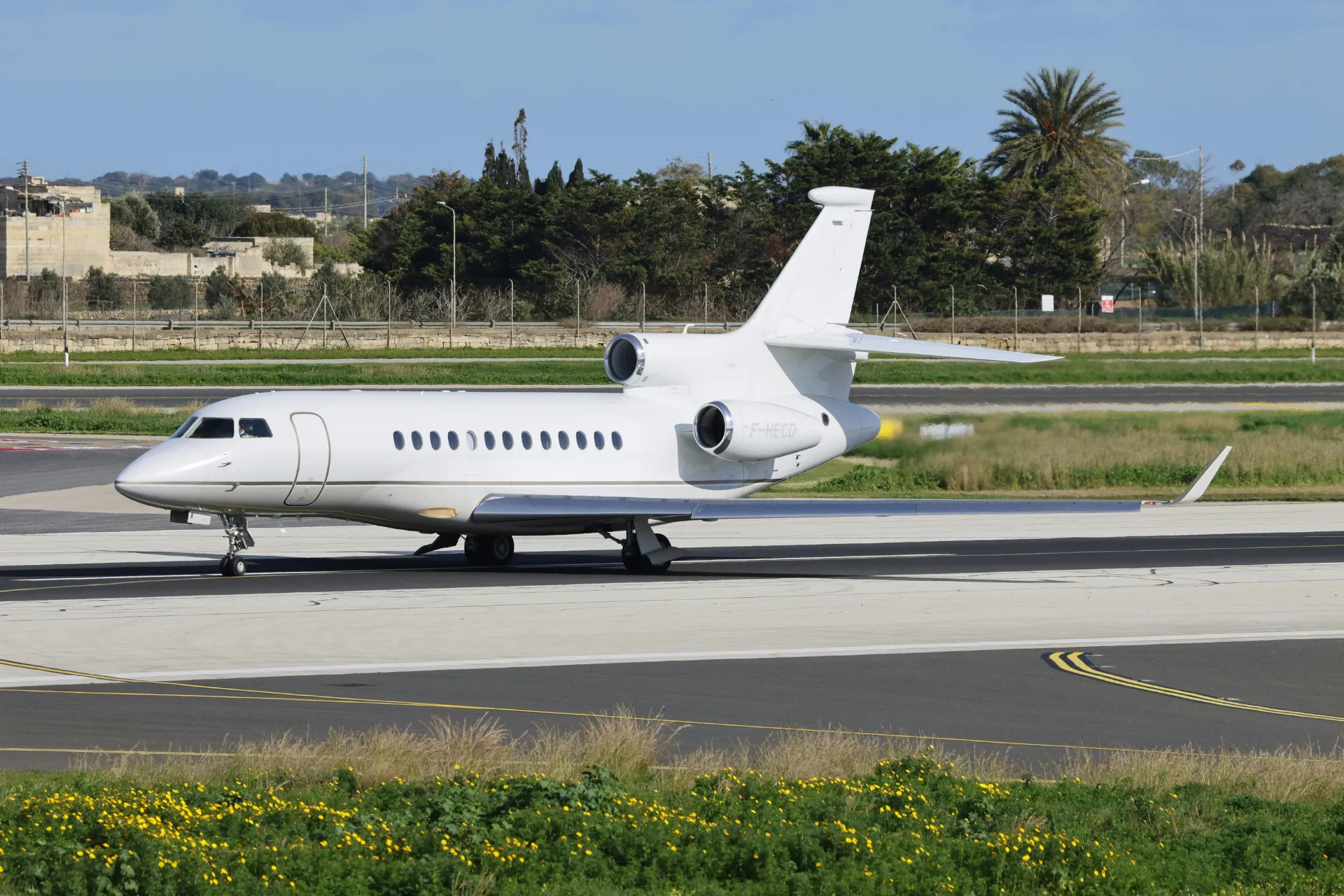
Private aviation has a carbon problem. Per passenger, per kilometre, a private jet emits significantly more CO2 than a commercial flight. That’s a fact, and there’s no value in pretending otherwise.
But the industry is changing. Not fast enough for some, too fast for others. Here’s where things actually stand in 2026.
SAF is the most impactful lever available today. Made from waste feedstocks — used cooking oil, agricultural residues, municipal waste — SAF reduces lifecycle carbon emissions by up to 80% compared to conventional jet fuel.
The progress:
The challenge:
At Altavia, we actively source SAF-capable operators and can arrange SAF uplift on request for routes where it’s available.
Offsetting has been the default response for years: calculate your flight’s emissions, then fund a project — reforestation, renewable energy, carbon capture — to compensate.
The reality check:
We partner with accredited offset providers and can arrange carbon balancing for any charter. But we’re transparent: offsetting doesn’t eliminate emissions. It’s a bridge, not a solution.
Newer aircraft are measurably more efficient. A Pilatus PC-24 burns significantly less fuel per seat-mile than a 20-year-old Citation. Winglets, advanced engines, lighter materials, and optimised aerodynamics compound into meaningful reductions.
What this means in practice:
It’s coming. Companies like Lilium, Heart Aerospace, and ZeroAvia are flight-testing electric and hydrogen-powered aircraft. But commercial readiness for anything beyond short-range, small-capacity flights is still years away.
For charter operations, the realistic timeline for electric or hydrogen aircraft is post-2030 for short routes and significantly later for longer legs. We monitor this space closely, but we won’t overstate what’s available today.
We don’t claim private aviation is green. It isn’t — not yet. But we believe in transparency, progress, and giving our clients the tools to make informed choices. The industry is moving. We intend to move with it.
Allgemein:
Pro Beitrag:
Empfohlene Veröffentlichungsreihenfolge: 1. How to Charter a Private Jet (stärkstes SEO-Keyword) 2. Light Jet, Midsize, Heavy (hohes Suchvolumen) 3. Empty Legs Explained (Conversion-Magnet) 4. Private Jet vs. First Class (überraschender Angle) 5. AERO Friedrichshafen 2026 (zeitkritisch — April!) 6–10. Rest nach Belieben


Altavia is an Air Independence Group Company. Altavia is a flight broker and as such arranges carriage by air by simply chartering aircraft from third-party aircraft operators, acting as agent, in the name and on behalf of its customers. Altavia only acts as an intermediary, does not itself operate aircraft and is not a contracting or an indirect carrier.